Most programmers think their slow code is a brain problem. It is usually a finger problem.
Think about it. You spend eight hours a day hitting plastic squares. If those squares feel mushy or stiff, your brain feels the drain. It is a subtle, constant tax on your mental energy.
At Productivity Lab, we obsess over the "flow state." That magic window where the syntax disappears and the logic just pours out. You cannot get there on a cheap laptop keyboard. Those flat keys have no travel. They have no soul. Eventually? Your wrists ache. You make typos. Your productivity drops.
A good mechanical keyboard is a professional tool. It is like a master chef using a balanced Japanese knife instead of a dull blade. In this guide, we dive deep into the best boards for 2026. These picks are based on hundreds of hours of real-world coding and research.
The 2026 Developer Setup Matrix
| Product Name | Switch Feel | Type | Price Range | Rating | Strengths | Weaknesses | Best For | Upgrade From |
|---|---|---|---|---|---|---|---|---|
Gateron Jupiter | Full Size (100%) | High-Ticket | 9.8/10 | Build quality, connectivity, "Endgame" feel | Weight (not portable), price | The Desktop "Endgame" | Plastic/Entry boards | |
Gateron Brown | Split Ergonomic | High-Ticket | 9.6/10 | Superior wrist health, concave keywells | Steep learning curve, footprint | Extreme Ergonomics | Standard keyboards | |
Tactile Quiet | Low Profile | Mid-Range | 9.3/10 | Battery life, office-ready aesthetic | Non-standard keycaps, limited mods | Office Stealth / Pro | Membrane keyboards | |
Keychron K Pro | TKL (80%) | Mid-Range | 9.2/10 | Balanced layout, VIA support, versatility | Height (needs wrist rest) | The All-Rounder | Generic TKLs | |
Low-Profile | 75% Low Profile | Mid-Range | 9.1/10 | Portability, aesthetics, typing fee | Battery life (RGB on) | Digital Nomads | Laptop keyboards | |
Sea Salt / Wisteria | 95% (1800) | Budget | 8.8/10 | Retro look, smart display, price | Software quality, build materials | Retro Aesthetic | Standard office boards | |
Keychron K Pro | TKL (80%) | Budget | 8.9/10 | Performance/price ratio, durability | Tray mount (stiffer feel) | Entry-Level Pro | Non-mechanical boards |
1. The Heavyweight Champion: Keychron Q6 Max
The "Buy it for Life" Desktop Investment
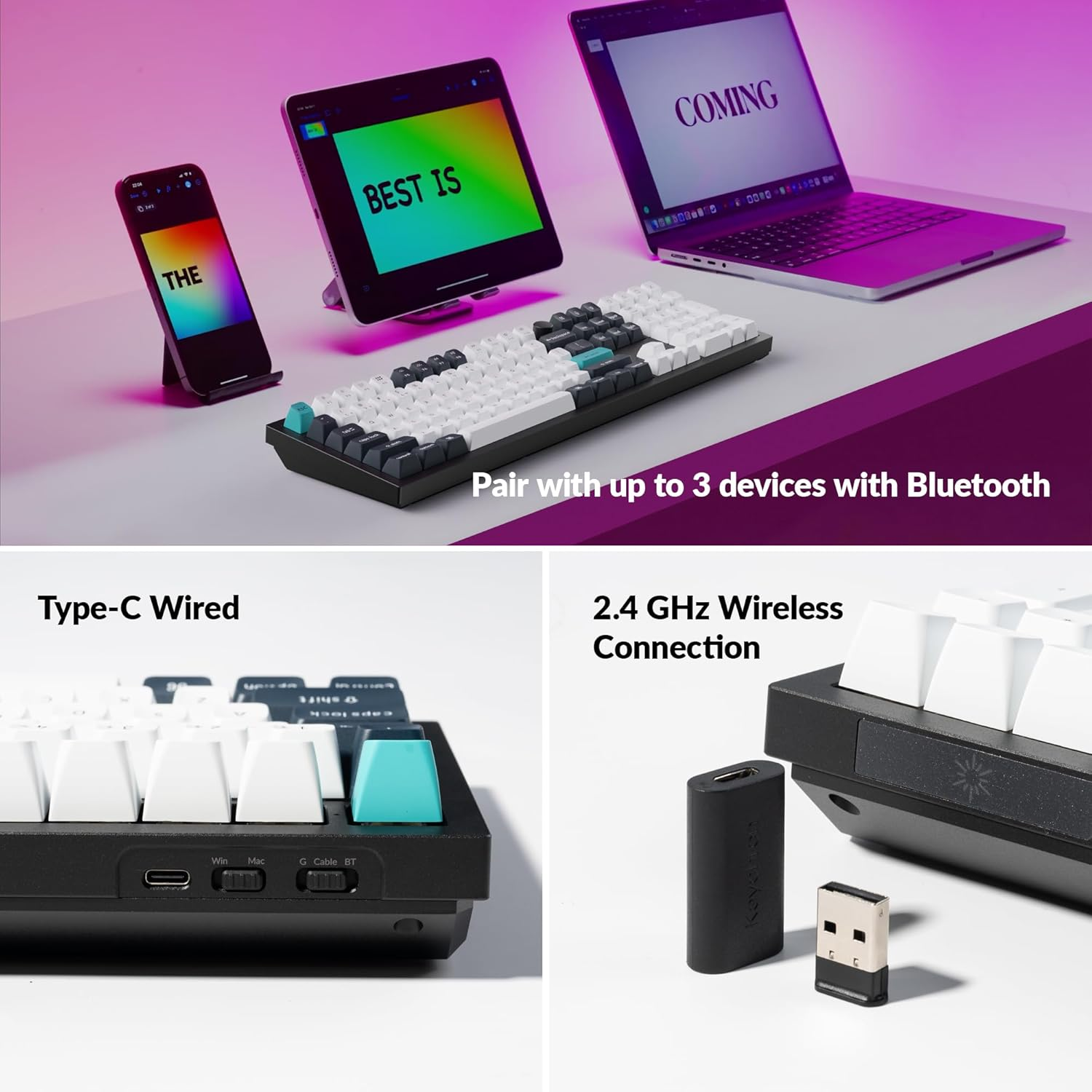
The Keychron Q6 Max is a literal slab of CNC-machined metal. It is heavy, solid, and stays put during intense coding sessions. In our testing, this stability is a key signal of professional-grade desk setup gear.
Why it works for developers:
The magic lies in the double-gasket design. Think of these as tiny shock absorbers inside the case. When you bottom out a key during a late-night sprint, the board absorbs the impact so your finger joints don't have to.
It also supports QMK and VIA software. This is the holy grail for devs. You can remap any key. Most of our researchers use this to put complex shortcuts—like terminal commands or brackets—right under their strongest fingers.
Build: Full aluminum body. Built to last a decade.
Sound: A deep, muted "thock" that won't distract a shared office. It sounds expensive, not annoying.
Switches: Comes with Gateron Jupiter switches. They are pre-lubed for a smooth, buttery feel right out of the box.
Customization: Full support for remapping keys—essential for moving brackets or terminal shortcuts to more accessible layers.
The verdict? It is too heavy for a backpack. But if you have a dedicated home office, this is your "forever" board.
2. The Health Saver: Kinesis Advantage360
The Ergonomic Powerhouse
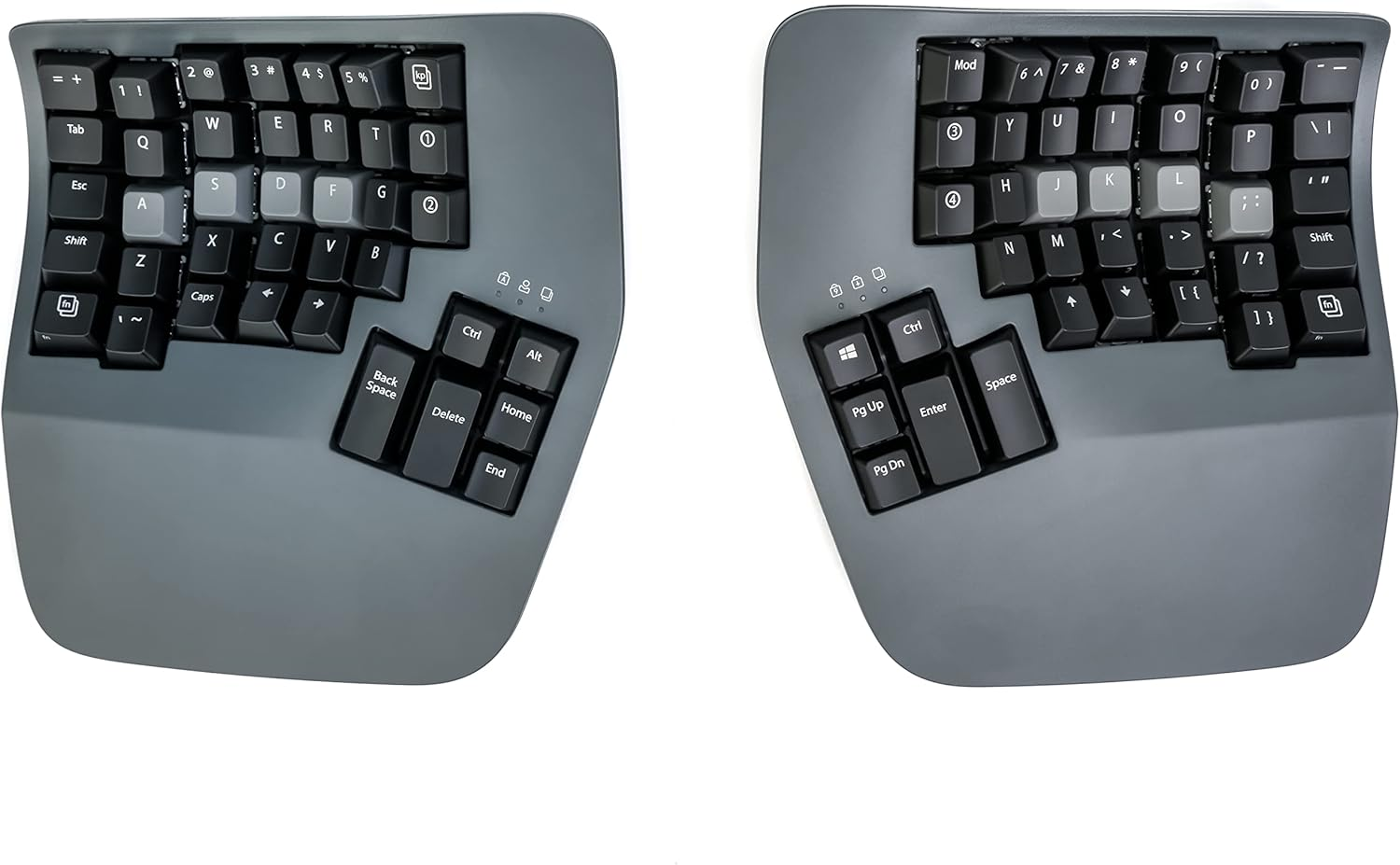
This board looks like a spaceship. The keys sit in deep, sculpted bowls. It is split into two halves. It looks scary, but for your long-term health? It is a miracle.
It is the gold standard for mechanical keyboards for software engineers who suffer from RSI.
Why it works for coding:
Standard keyboards force your wrists to bend outward (ulnar deviation). It is a fast track to carpal tunnel. The Advantage360 keeps your hands in a natural "handshake" position.
Even better? It moves keys like Enter, Space, and Backspacing to thumb clusters. Your thumbs are your strongest digits. Why leave them idle while your weak pinkies do all the heavy lifting?
Typing Comfort: Unmatched. I have seen devs who were ready to quit the industry find a new life with this board.
The Learning Curve: You will be at 50% speed for two weeks. It feels like learning to type all over again. The payoff? A career without chronic pain.
3. The All-Rounder: Keychron K8 Pro
The Best Balance of Features
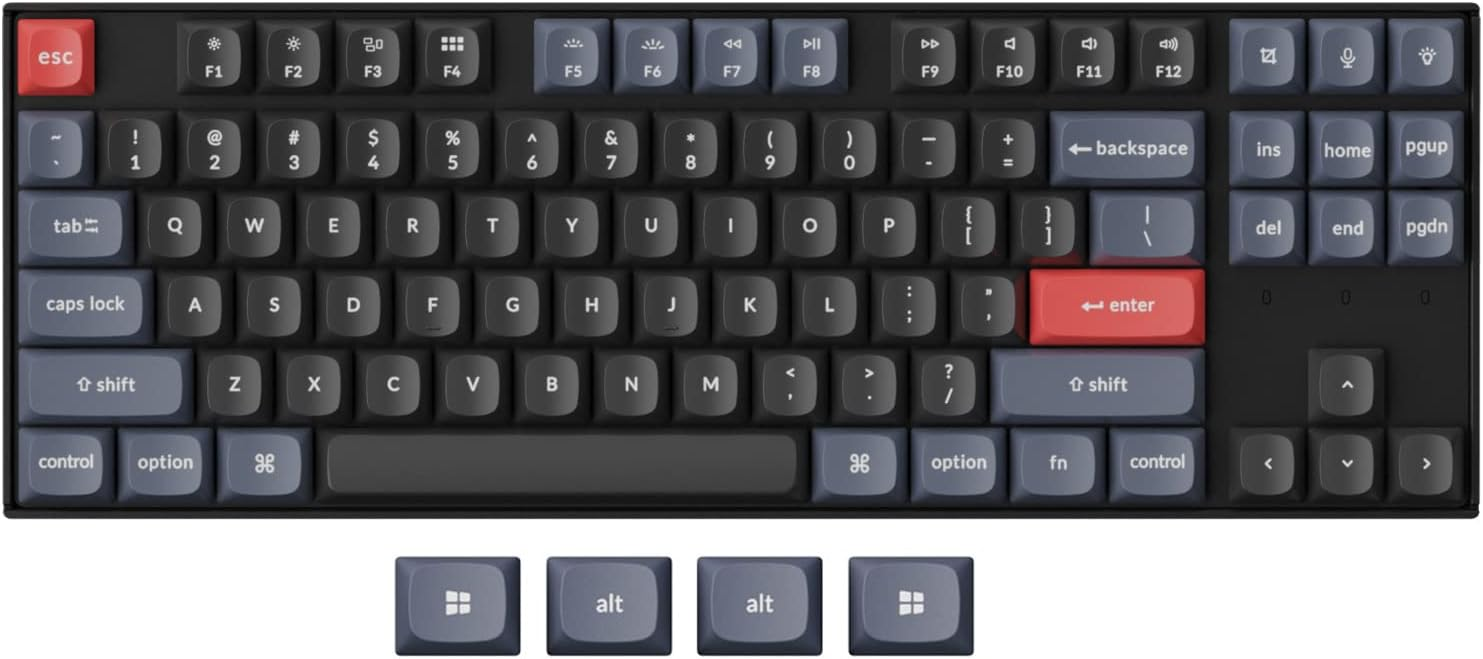
The Keychron K8 Pro uses a "Tenkeyless" (TKL) layout. By removing the number pad, your mouse arm stays closer to your body, significantly reducing shoulder fatigue during long hours.
Why it works for coding:
It was the first wireless board to offer full professional-grade customization. For the developer who wants a clean, cable-free desk setup but still needs to rebind keys, this is the most logical choice.
Switch Feel: Uses Keychron K Pro switches. They are consistent and reliable.
Compatibility: It has a physical toggle for Mac and Windows. It even comes with specific keycaps for both.
4. The Silent Professional: Logitech MX Mechanical
The Stealth Office Choice
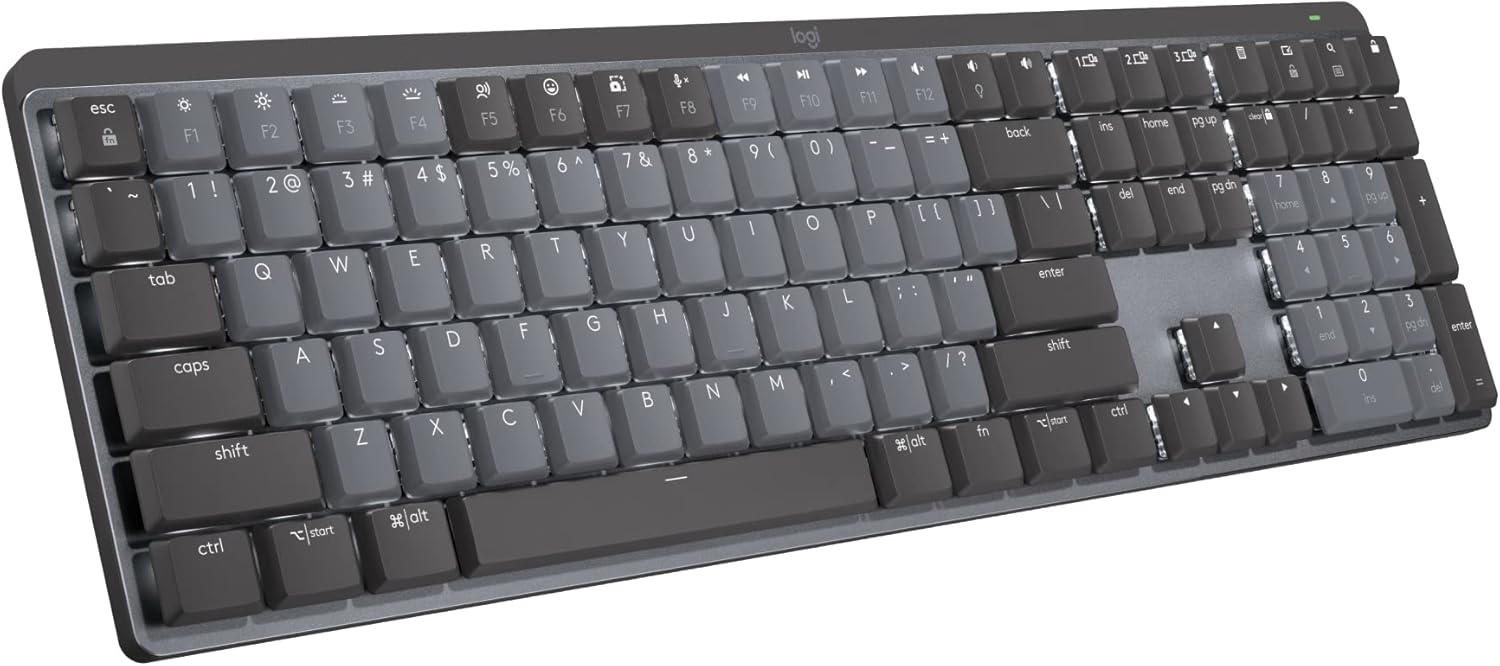
Logitech is the safe, reliable bet. The MX Mechanical is slim and sits low to the desk. It’s designed for the dev who needs to get work done without sounding like a typewriter.
Why it works for coding:
The Easy-Switch tech is world-class. If you jump between a MacBook, a Linux box, and a tablet, you can swap between them instantly with one button. The battery life is also incredible. It lasts for months on a single charge.
The Vibe: Sleek and minimalist.
The Downside: You cannot easily swap the switches. What you buy is what you get.
5. The Nomad’s Dream: NuPhy Air75 V2
The Portable Productivity Tool
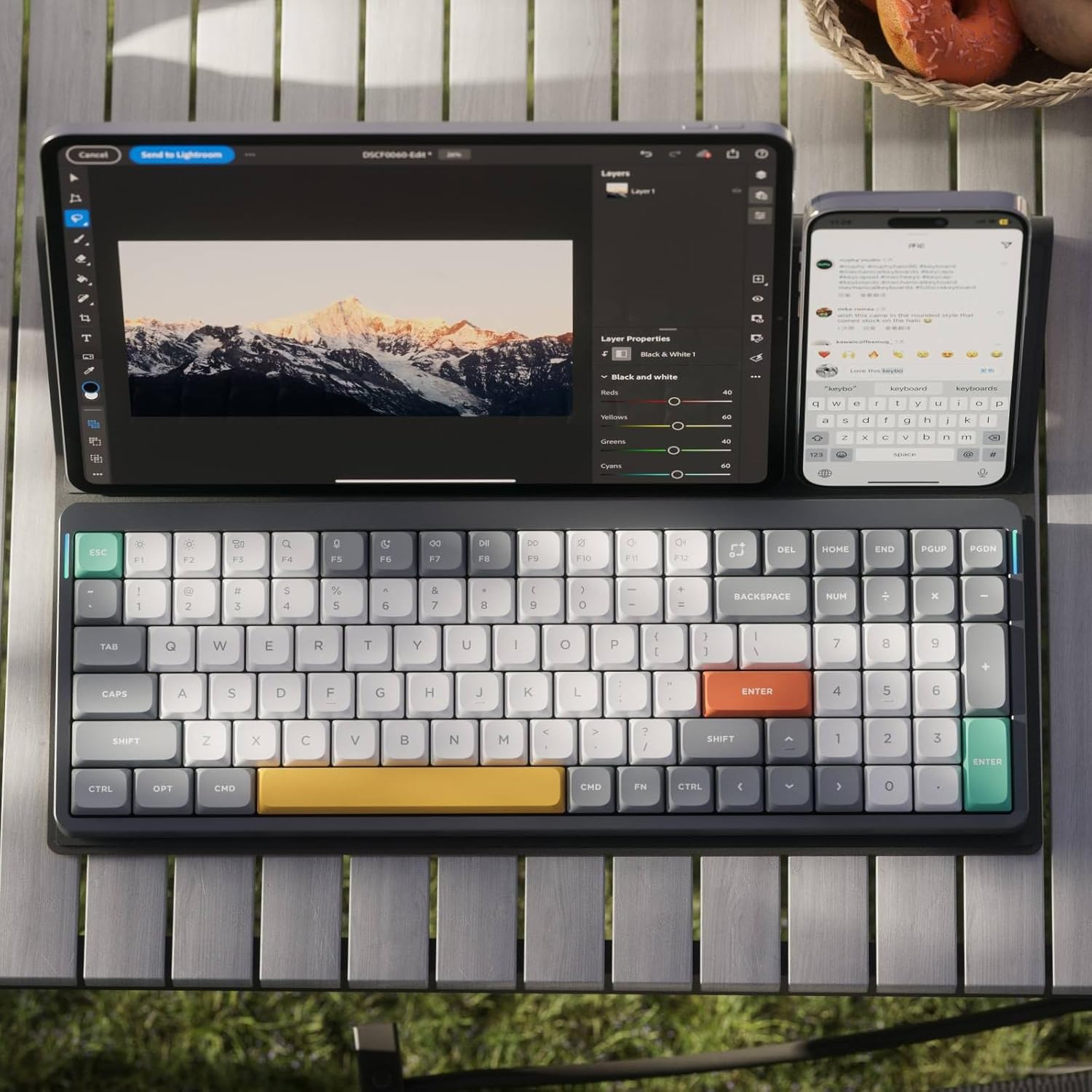
If your office is a coffee shop or an airport lounge, the NuPhy Air75 V2 is for you. It is thin enough to slide into a laptop sleeve but feels like a "real" mechanical board.
Why it works for coding:
It is designed to sit directly on top of most laptop keyboards. This means you can use your favorite tactile switches even on a tiny airplane tray. The V2 update also added a 1000Hz polling rate. In plain English? When you hit a key, the code appears instantly. No lag.
See Price & Reviews on Amazon
6. The Aesthetic Star: Epomaker RT100
Retro Style meets Modern Function
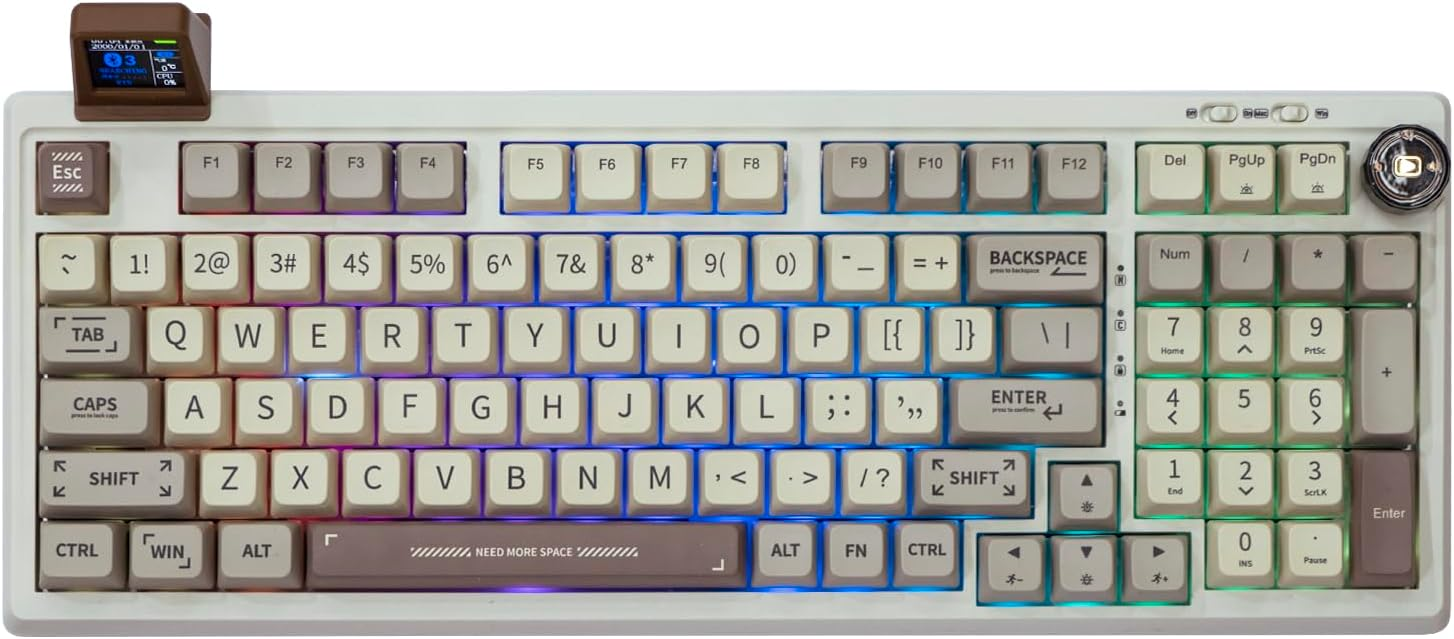
The Epomaker RT100 is a "95% layout." It keeps the number pad but squishes the footprint to save space. It also features a "Smart Mini TV"—a tiny screen that can show your CPU usage or a custom GIF.
Why it works for coding:
It uses a gasket-mount system at a budget price. It feels soft and "creamy" to type on. If you choose the Sea Salt or Wisteria switches, you get a highly satisfying sound that makes long coding sessions feel less like a chore and more like a hobby.
Pro Tip: The knob is great for scrolling through long files or controlling volume during deep-work playlists.
See Price & Reviews on Amazon
7. The Budget Hero: Keychron V3
The Gateway to Pro Keyboards
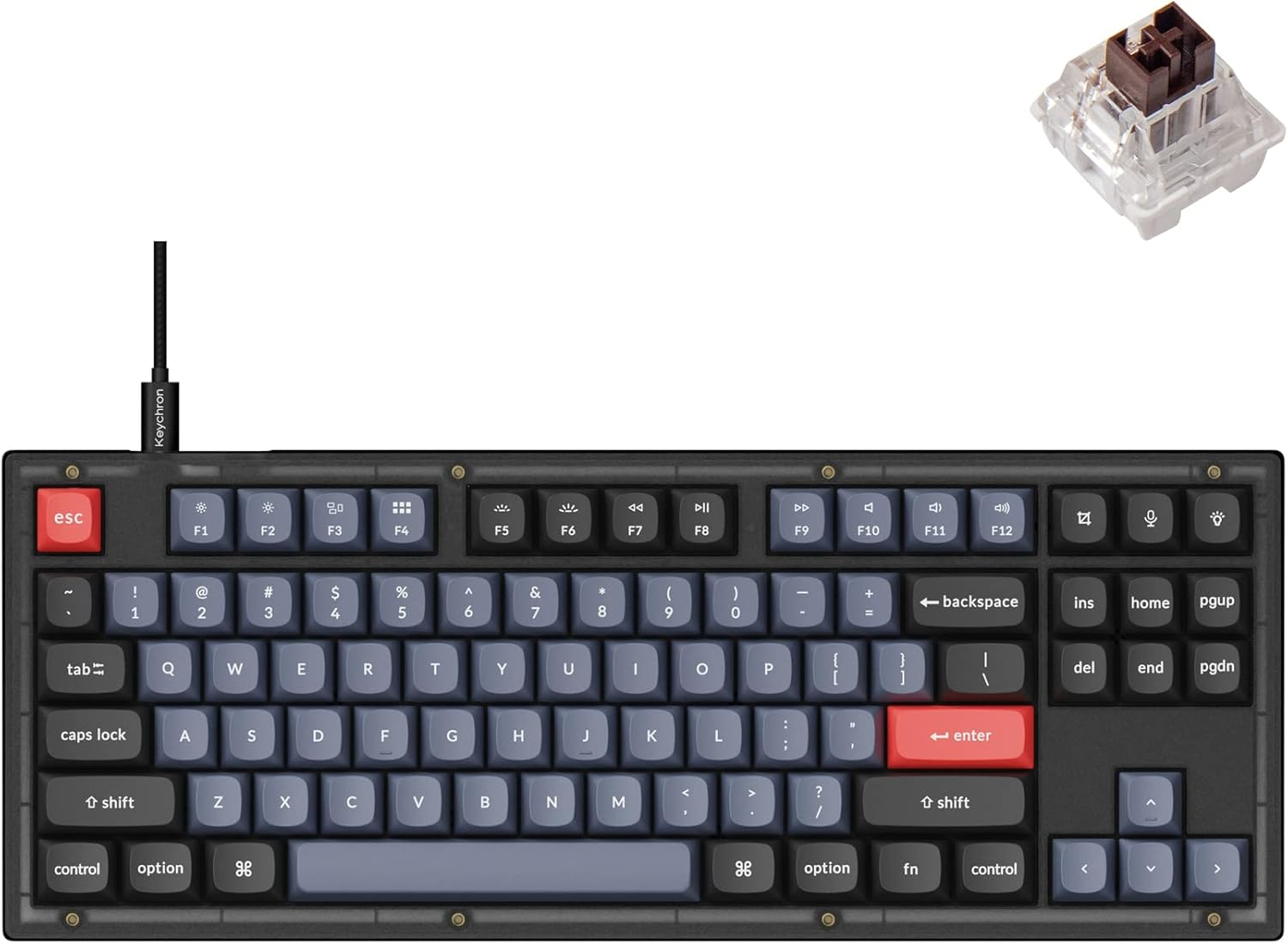
The Keychron V3 is for the developer who wants to upgrade but doesn't want to spend $200. It is plastic instead of metal, but the internals are high-quality.
Why it works for coding:
It is simple. It works. It is reliable. You still get the software to remap keys. You still get the hot-swappable sockets (meaning you can change the switches later without soldering). It is the perfect entry point into Workspace Ergonomics.
How to Choose Your Tool
Picking a keyboard is like picking a programming language. You need the right tool for the job.
Switch Type: Tactile has a tiny "bump" you can feel (perfect for coders). Linear is smooth and fast. Clicky is loud—don't use these if you have roommates.
Build Quality: Look for PBT keycaps. They are made of a dense plastic that doesn't get greasy or shiny after months of use.
Ergonomics: Don't wait for the pain to start. A good board is an investment in your hands.
The Productivity Lab Verdict:
Best for Home: Keychron Q6 Max.
Best for Health: Kinesis Advantage360.
Best for Travel: NuPhy Air75 V2.
Best for Value: Keychron V3.
Don't let a bad keyboard slow you down. Better tools lead to better work. ---
As we move from the hardware itself into the "software" of how you actually use it, this is where the 10x gains happen. Having a $300 keyboard is great, but if you're still using it like a standard office peripheral, you're leaving performance on the table.
Technical Optimization: The Developer’s Secret Weapon
Most developers treat their keyboard as a static tool. If a key is labeled Caps Lock, they leave it as Caps Lock. This is a massive waste of prime real estate.
One of our favorite Productivity Systems is reducing "travel distance." You want your hands to move as little as possible. This is where Layers come in.
1. The Power of Layers (QMK, VIA, and ZMK)
Think of layers like the Shift key. When you hold Shift, your keys do something different (lowercase becomes uppercase). Modern boards like the Keychron Q6 Max or the NuPhy Air75 V2 let you create your own "Shift" keys.
The "Vim-Style" Escape Remap: The distance to the physical Escape key is a productivity killer. Most of us at the Lab remap Caps Lock to:
Escape when you tap it.
Control when you hold it down.
The Symbols Layer: Programmers live and die by brackets {}, parens (), and pipes |. You can create a "Symbol Layer" that activates when you hold your spacebar. Suddenly, your home row becomes a dedicated dashboard for coding symbols. No more reaching for the top right corner of the board.
2. Switch Physics: Actuation vs. Bottom-Out
This is where it gets nerdy.
Actuation Force: This is the pressure needed for the computer to see the letter.
Bottom-Out Force: This is the pressure needed to hit the floor of the keyboard.
For long coding sessions, you want a "cushion." If the gap between these two numbers is too small, your fingers will slam into the base of the keyboard. This causes fatigue.
Personal Anecdote: I once used a keyboard with ultra-light switches (35g). I made so many typos just by resting my fingers on the keys that I had to switch back to a medium-weight 55g tactile switch. It saved my sanity—and my Git history.
Maintenance: Keeping Your Tool Sharp
A developer's keyboard is a magnet for dust, skin oils, and the occasional coffee splash. If you’ve invested in a mid-to-high ticket board, you need to protect that investment.
PBT vs. ABS: Why Material Matters
ABS Plastic: These are common on cheaper boards. They are soft and develop a "greasy shine" within months. They eventually feel slippery.
PBT Plastic: This is what you want. It is dense, heat-resistant, and has a slightly textured feel. It stays matte and grippy for years. The Keychron K8 Pro and V3 come with high-quality PBT right out of the box.
The Cleaning Protocol
Weekly: Use a can of compressed air. Blow out the crumbs and dust. It takes 30 seconds.
Monthly: Use a damp microfiber cloth to wipe the keycaps. Pro Tip: Avoid harsh chemicals; they can eat through the plastic over time.
Yearly: Use a keycap puller to take everything off. Soak the caps in warm, soapy water. While they dry, brush the "plate" (the part under the keys).
The "Silent Coding" Myth
Many developers ask us for "Silent" switches. While the Logitech MX Mechanical is great for quiet offices, true silence comes from internal dampening.
If you are working in an open-plan office, look for:
Gasket-Mounts: This is the internal suspension we mentioned in Part 1. It kills the "clack" and replaces it with a muted "thud."
O-Rings: These are tiny rubber hoops you can put on the stems of your keys. They act like tiny mufflers.
Advanced Ergonomics: Your Desk is a System
Even the best keyboard won't save you if your Desk Setup is broken.
The 90-Degree Rule: Your elbows should be at a 90-degree angle. If your desk is too high, you have to "cock" your wrists upward. This is a one-way ticket to wrist pain.
Float, Don't Rest: Use a wrist rest between typing sessions. While you are actually coding, try to let your wrists float like a piano player. This keeps the blood flowing.
Monitor Height: Your eyes should hit the top third of your screen. If you are looking down at a laptop, you are straining your neck and shoulders, which makes your hands work harder.
Final Summary
Investing in a mechanical keyboard is a signal that you take your craft seriously. Whether you choose the retro charm of the Epomaker RT100, the portability of the NuPhy Air75 V2, or the medical-grade health benefits of the Kinesis Advantage360, you are buying back your energy.
Better tools really do lead to better work. It is that simple.